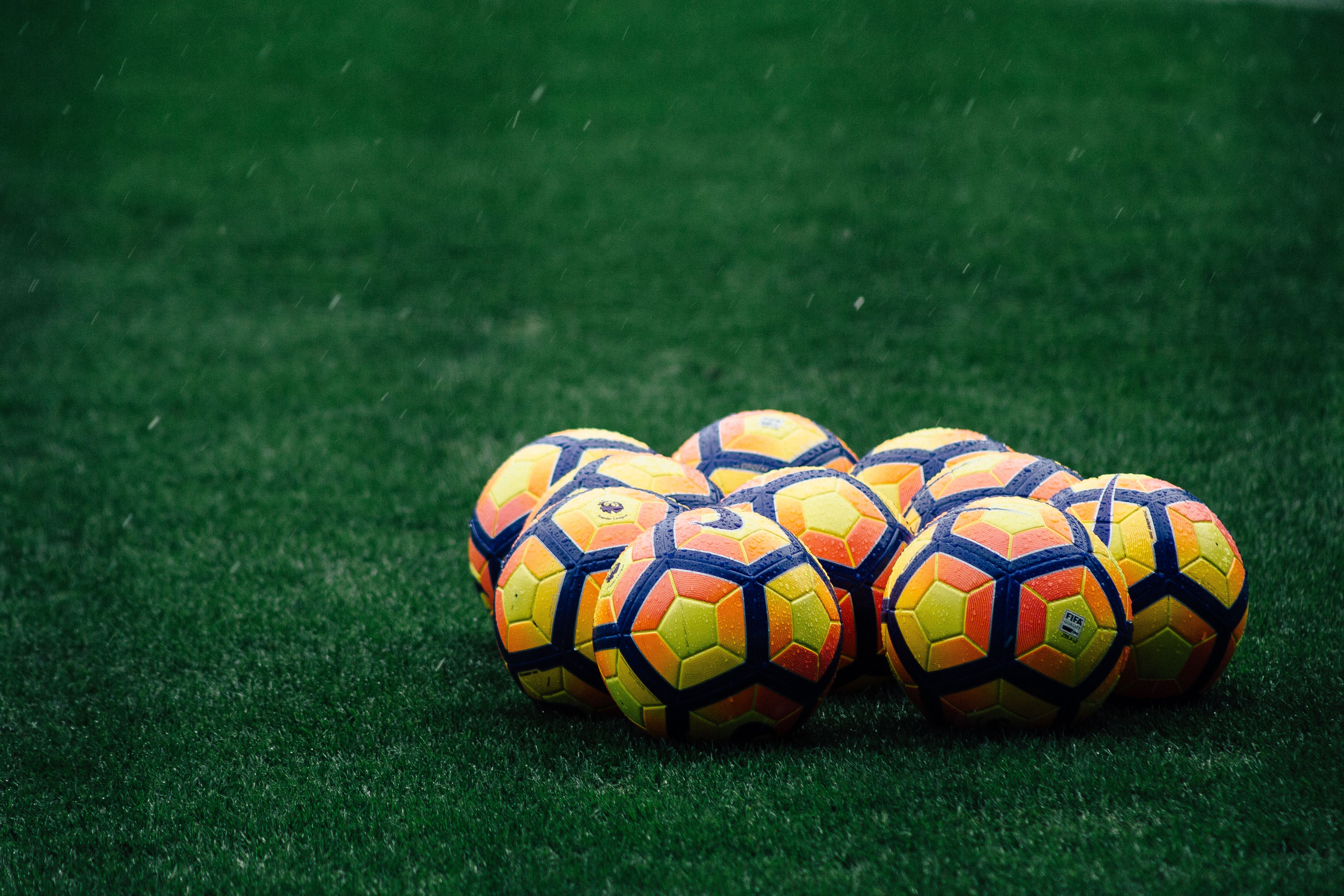
Welcome to the cornerstone of what I believe is a missing part of player development. Ignore the number 10,000 for now and instead shift your focus to what repetition means to you. How does habit formation, skill focus, and refinement work (or not work) in . your current practices?
The overall message here is simple, but not easy: what get’s measured gets managed.
A reality of our game is most players do not get enough time on the ball in structured and an unstructured environments. Coaches and teams do not have the time to fill in the gaps of individual development and technical proficiency. In any discipline, the practitioners that immerse themselves in getting the most out of themselves find the most success. The musician that performs her scales on the piano reaches higher levels of performance and proficiency. The writer that puts down five-thousand words a week is that much closer to writing with more discipline and structure.
And this is what development is predicated on – discipline and structure.
Over the years, I’ve written and been interviewed extensively on this topic. Here’s the thing I want to get across from the start –getting 10,000 touches a day on the ball is easy and albeit time-consuming. Getting 10,000 functional touches a day on the ball is a different story. What’s the difference between the two? Robotic and unrealistic rote movements don’t produce players, it produces repetition-riddled players that can’t make the skill transfer from isolated movements to game-realistic movements. Adding gameplay context, dynamism, and intensity to the movements not only increases the effectiveness of the overall practice, but it adds speed to the repetitions, too.
That last part is where we begin to discuss the number 10,000, which is NOT important. It’s simply the target I had for myself as a player growing up. I aimed for this amount of functional touches at my highest training levels (there’s a few breakdowns below of how this can be segmented out).
The training philosophy behind the methodology is to mimic movements, skills, and recruit sequences that will undoubtedly be used in meaningful competition. A technical workout of this heavy of a workload requires mental toughness, persistence, application, discipline, and above all – consistency. These workouts are time-consuming but they are manageable if a player makes the time to complete them. I do not suggest any single way to complete the workouts so long as they are done with the right attitude and goal in mind. Some players will opt to do a chunk in the morning and finish the rest in the evening. Others will dedicate more time to complete the entire workout. The beauty is a player can do them (or not do them) at their own pace and schedule.
The following workout is for the player on a structured technical developmental path. The time it takes to complete this workout is less important than the quality of each set.
For coaches who want to pull from this model for their teams to try, be smart and responsible with scaling the repetitions depending on the level of team you coach. Again, the numbers do not matter as much as the quality of the repetitions.
10,000 Touches Workout Notes (continued)
The following another variation of the workout mentioned in the article featured in www.thesefootballtimes.co and on The Guardian. This workout along with numerous other variations were workouts I developed, modified, and executed on a regular basis as part of my supplemental development. These workouts were performed year-round and became part of my repertoire. Below are a few things you should keep in mind as you implement this type of methodology in your training.
Considerations:
1. A target objective – Identify the tangible need to adopt this training approach. It’s difficult at first and it’s time-consuming.
2. Identify your weaknesses – Recognize ways you can convert these weaknesses into strengths that transfer to match play.
3. It’s not fancy. These are technique-building, foundational movements. Later workouts are far more intricate and elaborate. These are simple, touch-building exercises.
4. Training speed vs. Match speed – Start slow. Rehearse the each movement/skill then convert each
movement to a match speed instance.
Time Demands to complete workout (approx.)
6. Space – nothing fancy, small plot of land ideally with a wall or rebounding surface (if you don’t have a partner). I’ve done this in my basement, garage, and backyard. The surface doesn’t matter either. Just find a safe place to train (grass/turf or pavement)
7. Equipment – ball, cones (optional), watch, pen/paper
8. Be accountable. If it’s too much at first, stop and rest. Break up the workout into smaller chunks. For example, do half the workout early in the day, finish the rest later on.
9. Modify it for the conditions – don’t focus on what you’re already proficient at
10. Take breaks – this is as much a fitness workout as it is a technical workout
11. Progression – combine skills to double/triple the touches per round. For example, 10 pendulums + 10 V-Turns = approx. 40 touches.
Remember:
A. Build a foundation of technique/skills
B. Be consistent/accountable
C. Increase proficiency and confidence
D. Plan your workout, tally the reps/rounds/sets
Note: This workout is supplemental training. It does not replace match play or regular group training sessions.
Workout Variation I
1000 Passes (wall or partner) – one-touch 500/each foot (alternating or isolated)
500 juggles/keep-ups
10 x 50 (25 each direction) Cruyff turns = 500 reps (250 each foot)
500 pendulums
500 toe touches
500 V-Turns (250/each foot)
500 L-Turns (250/each foot)
1000 Dribble patterns at pace (free dribble, touch the ball every step, incorporate cuts, turns, and skills)
Break: 5000 reps
250 passes (wall or partner) – must take three-touches (1 pass should equate to 4 touches)
10 x 100 juggles/keep-ups
250 outside cuts/chops at a cone with Right foot
250 outside cuts/chops at a cone with Left foot
500 toe-touches while moving ball forward and backward (drag back and pushes)
200 Cruyff turns (100 each foot with CLEAN technique, sell the move by faking a shot or cross)
20 x 10 juggles/keep-ups
50 lateral ball rolls with Right foot, 50 lateral ball rolls with left foot = 100 touches
1000 Speed dribble pattern (one touch every [other] step) – incorporate turns, chops, cuts, turns, and skills
500 pendulums at pace (move forward and backward)
10,000 touches
Time:______________
10,000 Touches – Workout Variation III
Stationary pendulums (knock ball between feet); sets of 10X100; 1,000 touches
Rotate 180, 360-degrees as you improve
Adv. Perform pendulums forward, backward, laterally if possible
Step-touches – Essentially a light/fast jog with ball, touch ball every step. Ideally, 1,500 steps = 1,000 touches
Juggle – sets of 10×100 = 1,000 (advanced); 20×50 =1,000 (intermediate); 1,000 touches
V-turns – For this move, the path of the ball follows a V shape. This starts by doing a fake kick, then doing a drag-back of the ball stopping in front of your body, then pushing the ball forward on the opposite side of your body. 500 each foot = 2,000 touches
Cruyff Turns – sets of 4×25 (2 with right foot, 2 with left foot). Repeat circuit 5 times.; 500 touches
Wall/partner passes – 1-touch vs. wall or with partner (8 yards); Sets: 10X100 alternate L/R = 1,000 touches
2-touch (receive + pass): 10X200; 2,000 touches
Sole touches – roll ball using bottom of foot. 250 each foot; 500 touches
180-degree turn – 500 touches (250 each foot)
Juggle – 500 touches
10,000 touches
Record Date/Time:
Training Notes/Comments:
10,000 Touches Workout Variation III
1000 juggles (10 sets of 100)
1000 passes (500 each foot) w/ wall or partner
500 toe touches
500 pendulums
500 Cruyff turns (250 each foot)
500 speed touches
1000 touches w/ only bottom of foot
1000 passes w/ partner or wall
500 juggles alone
500 juggles w/ partner(s) (alone if you don’t have a partner)
250 touches right foot only
250 touches left foot only
500 drag-backs (250 each foot)
1000 juggles
1000 passes w/ partner or wall (500 each foot)
10,000 touches



Leave a Reply